Scotland Editor
BBC Scotland Information

 BBC
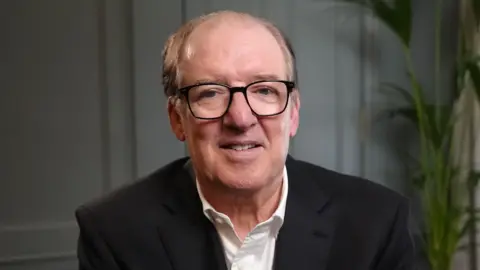
BBCThe previous proprietor of Rangers, Sir David Murray, has apologised to followers for his half within the monetary calamity that befell the membership greater than a decade in the past.
Sir David, who bought the Ibrox aspect for £1 to businessman Craig Whyte, presided over Ibrox when the membership gave £47m in tax-free loans to gamers and workers between 2001 and 2010.
Underneath Mr Whyte’s possession the Rangers enterprise went into liquidation in 2012 – a yr after the sale.
In a wide-ranging interview with the BBC to mark the publication of his autobiography, Mettle, Sir David stated he regretted his choices and stated sorry to followers and membership workers.
“In fact I might apologise,” he stated. “I am not one in all these individuals who run an organization and conceal.
“It was a horrible second, and I apologise to all of the workers, good individuals, and I do know lots of them to this present day.
“I might hope in hindsight, they have a look at the info and suppose I used to be put in a really troublesome place.”
What had been the info?
 SNS
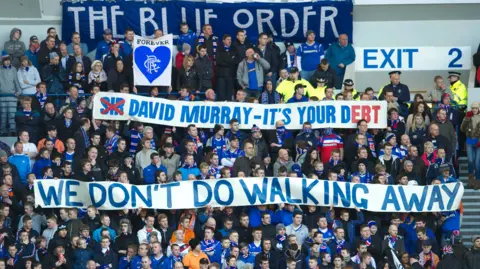
SNSWhat was often called the “massive tax case” centred on the membership’s use of Worker Profit Trusts (EBTs).
EBTs, which had been additionally utilized by different golf equipment, enabled Rangers to pay £47m to gamers, managers and administrators between 2001 and 2010 in tax-free loans.
HMRC argued the funds had been earnings and needs to be taxable.
Two tribunals in 2012 and 2014 had beforehand present in Rangers’ favour however the Supreme Courtroom dominated in favour of HMRC after an attraction in 2015.
The case unfolded in opposition to a backdrop of economic meltdown for Rangers.
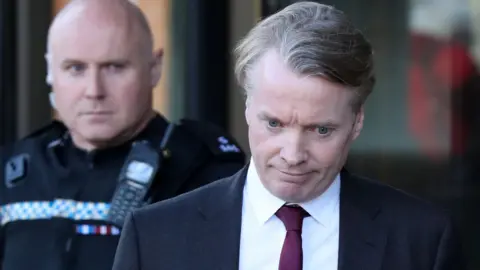
Years later, Mr Whyte was charged and cleared of taking up the membership by fraud.
A court docket heard that his takeover of Rangers was sealed with a pound coin being tossed throughout a desk in Sir David’s workplace.
On the time, Mr Whyte had agreed to tackle obligations which included paying an £18m financial institution debt and £5m for gamers.
Sir David denied failing to hold out due diligence on Mr Whyte, saying: “I went on the info in entrance of me.”
 PA Media
Challenged on whether or not it was morally acceptable to deprive the NHS and different public providers of funds so millionaire footballers might pay much less tax, Sir David replied: “They did not do something unlawful.”
“Footballers are getting paid an excessive amount of. Not simply at Rangers, all over the place,” he went on, including: “It is avoidance. Folks try this.”
Sir David denied that the trophies Rangers had gained on this interval had been tainted by the tax preparations and in addition denied that the scheme amounted to purchasing success, or monetary doping.
“In no way,” he replied, including: “It was confirmed in the long run it wasn’t an unlawful tax scheme.”
Sectarianism, metal and Sir Sean Connery
 PA Media
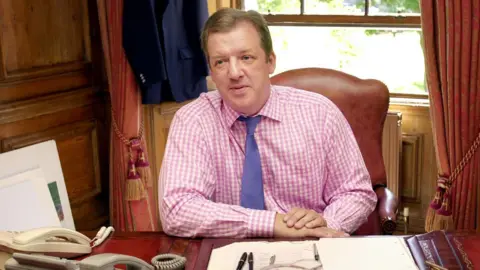
Sir David made his title within the metal trade, forming the corporate Murray Worldwide Metals Restricted by the age of 23.
In 1988, he bought Rangers for £6m and went on to see the membership win 15 league championships and 20 home Cups.
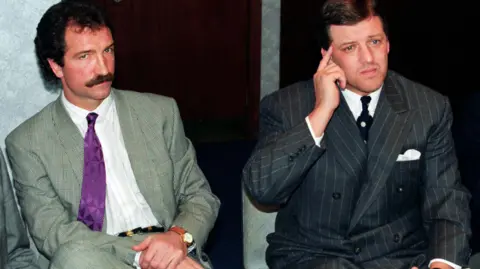
He and supervisor Graeme Souness signed the membership’s first high-profile Catholic participant since World Warfare Two – Mo Johnston, who beforehand performed for Celtic – in 1989.
Reflecting on sectarian tensions in Glasgow, which he described in his guide as “vitriol”, Sir David stated the continued singing of sectarian songs at Ibrox was not acceptable.
“There isn’t any place for that in society,” he stated. “I do not suppose it is proper and I’ve stated that and I misplaced a number of the help of the Rangers followers by saying that.”
He additionally instructed BBC Scotland Information a few enterprise proposal supplied to him by media mogul Robert Maxwell in a cellphone name sooner or later.
Murray instructed BBC Scotland Information: “He stated I’m pondering of shopping for Celtic, we might put Rangers and Celtic collectively as one and they might be a giant drive.
“I stated I do not suppose you already know the script up right here, I do not suppose it’s sensible and I do not suppose it will work.”
 SNS
SNSThe businessman additionally known as for an inquiry into the Scottish authorities’s involvement within the sale of two metal processing crops in Lanarkshire to the tycoon Sanjeev Gupta.
The sale was backed by a £7m help package deal from the Scottish authorities.
Sir David claims ministers rejected his rival bid to buy the enterprise as a result of it was probably incompatible with state support guidelines, and criticised Mr Gupta’s administration of Liberty Metal within the years since.
The Scottish authorities it had “acted shortly” to help the transaction, including: “This intervention sustained over 100 jobs at Dalzell and retained steelmaking capability in Scotland.”
Sir David was additionally vital of the economic insurance policies of each the Scottish and UK governments saying: “It is ridiculous that Britain doesn’t have the capability to make a metal plate for its defence.”
 SNS
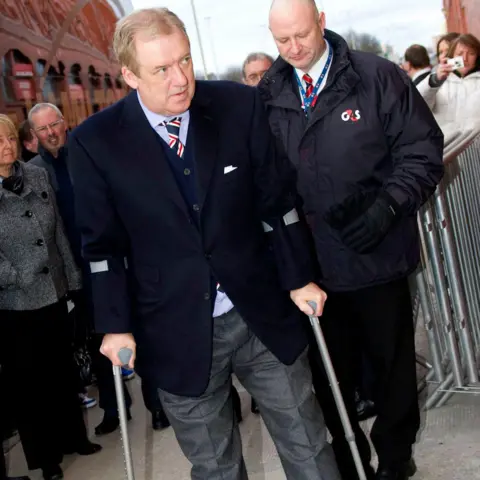
SNSElsewhere in his guide, Sir David describes intimately the automotive accident in 1976 that led to his legs being amputated on the age of 24, a yr after founding his metals enterprise.
On the best way dwelling from a sport of rugby in his fibreglass Lotus, a tyre blowout despatched him off the highway and right into a tree.
Sir David described how fellow rugby gamers stopped to assist him, utilizing their ties as tourniquets earlier than he was taken to hospital for life-saving surgical procedure.
“None of us understand how powerful we’re till the time we learn the way powerful we’re,” he stated.
“I had a younger son of a number of months previous and a boy of two. I might a younger spouse. My father had simply handed away. I might solely go a technique. I could not fail. I’ve a duty,” he added.
One other chapter within the autobiography is devoted to Sir Sean Connery, who was an in depth good friend of Sir David’s.
The guide describes how the pair travelled to Dunblane within the aftermath of the homicide of 16 youngsters and their trainer within the Scottish city on 13 March 1996.
“It was after the horrible information up there that Sean wished to go to it. And I took him up with some flowers, and quietly he stood for a minute and put some flowers on the college gates. A really troublesome second,” stated Sir David.
“He was such a patriot, Sean. He took an curiosity in Scotland on daily basis and he simply wished to be there.”
About the Author